


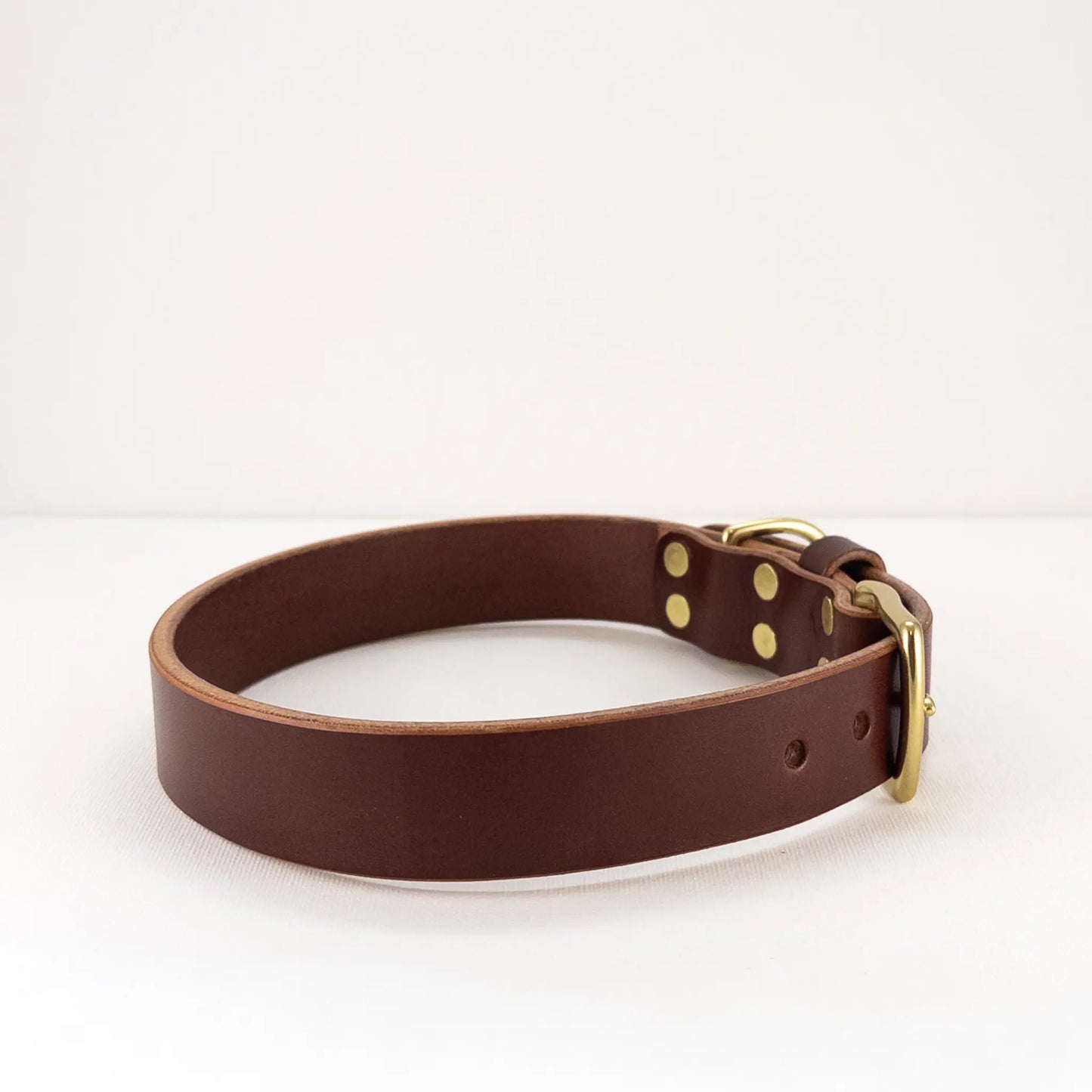


Collar Size Guide
A good fit means measuring your own dog, not guessing from a breed chart. Two dogs of the same breed can need two different sizes, so we always recommend measuring rather than guessing from weight or breed alone.
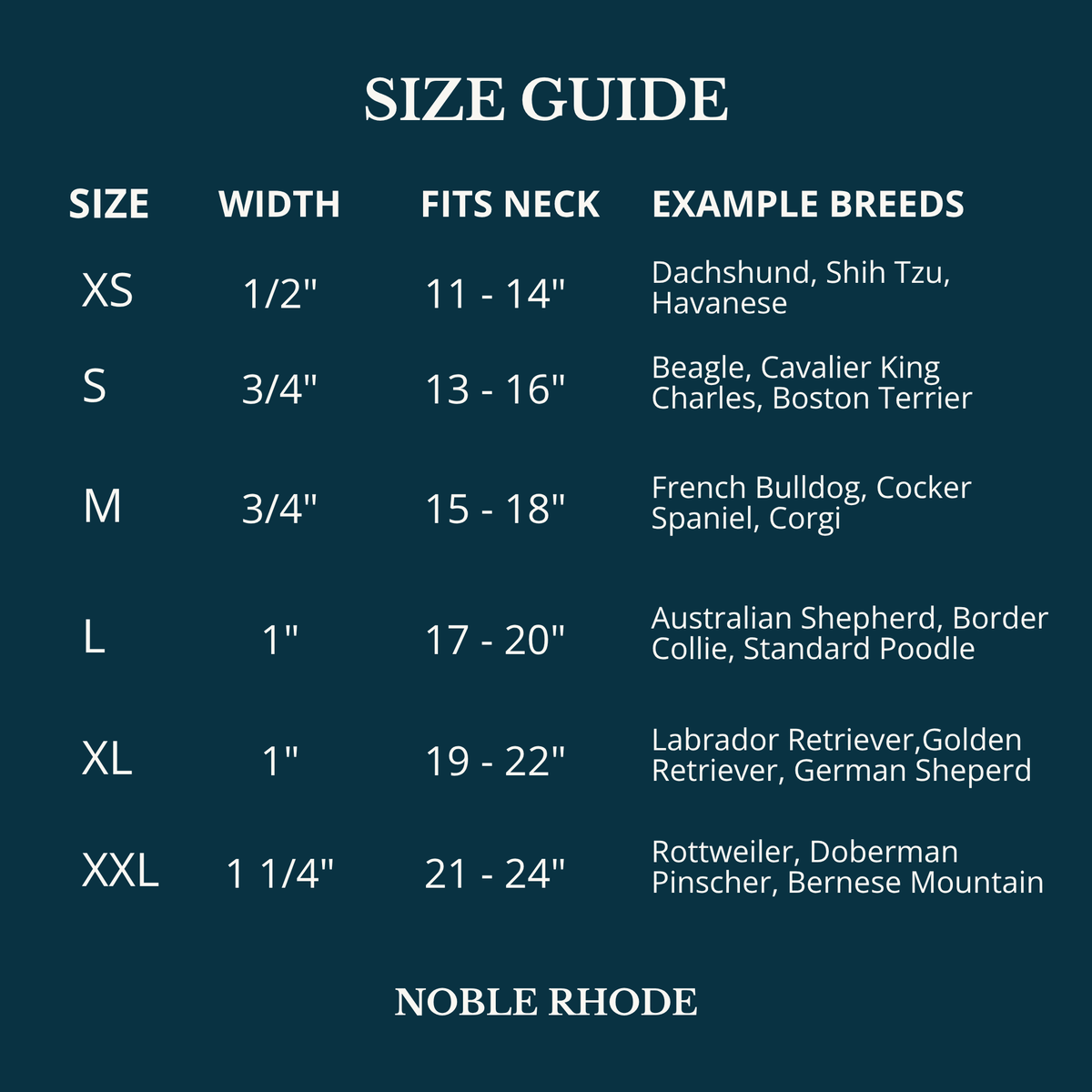
Size Chart
| Size | Neck | Fits Dogs Like |
| XS | 11"-14" | Dachshund, Shih Tzu, Havanese |
| S | 13"-16" | Beagle, Cavalier King Charles Spaniel, Boston Terrier |
| M | 15"-18" | French Bulldog, Cocker Spaniel, Corgi |
| L | 17"-20" | Australian Shepherd, Border Collie, Standard Poodle |
| XL | 19"-22" | Labrador Retriever, Golden Retriever, German Shepherd |
| XXL | 21"-24" | Rottweiler, Doberman Pinscher, Bernese Mountain Dog |
How to Measure
Wrap a soft measuring tape (or use a piece of string, measured against a ruler) around the base of your dog's neck, where a collar naturally sits. This should be close to the shoulders rather than up near the ears. Measure over the coat, not pressed down against the skin. Keep it snug but not tight, then slide two fingers between the tape and your dog's neck. That's the fit you're after: secure, with enough room to stay comfortable through a full day of wear.
If Your Dog is Between Sizes
Size up. A little extra room now means a collar that stays comfortable day to day, without feeling snug.
For Puppies
Puppies grow quickly, so measure your puppy now and size up rather than sizing exactly to today's measurement. A little extra room means the collar keeps fitting as they grow into it, instead of being outgrown in a few weeks.
Still Unsure?
If your dog's measurement falls right on the line between two sizes, or you're working with an unusual build, we'd love to help you find the right fit. Reach out here and we'll get back to you.